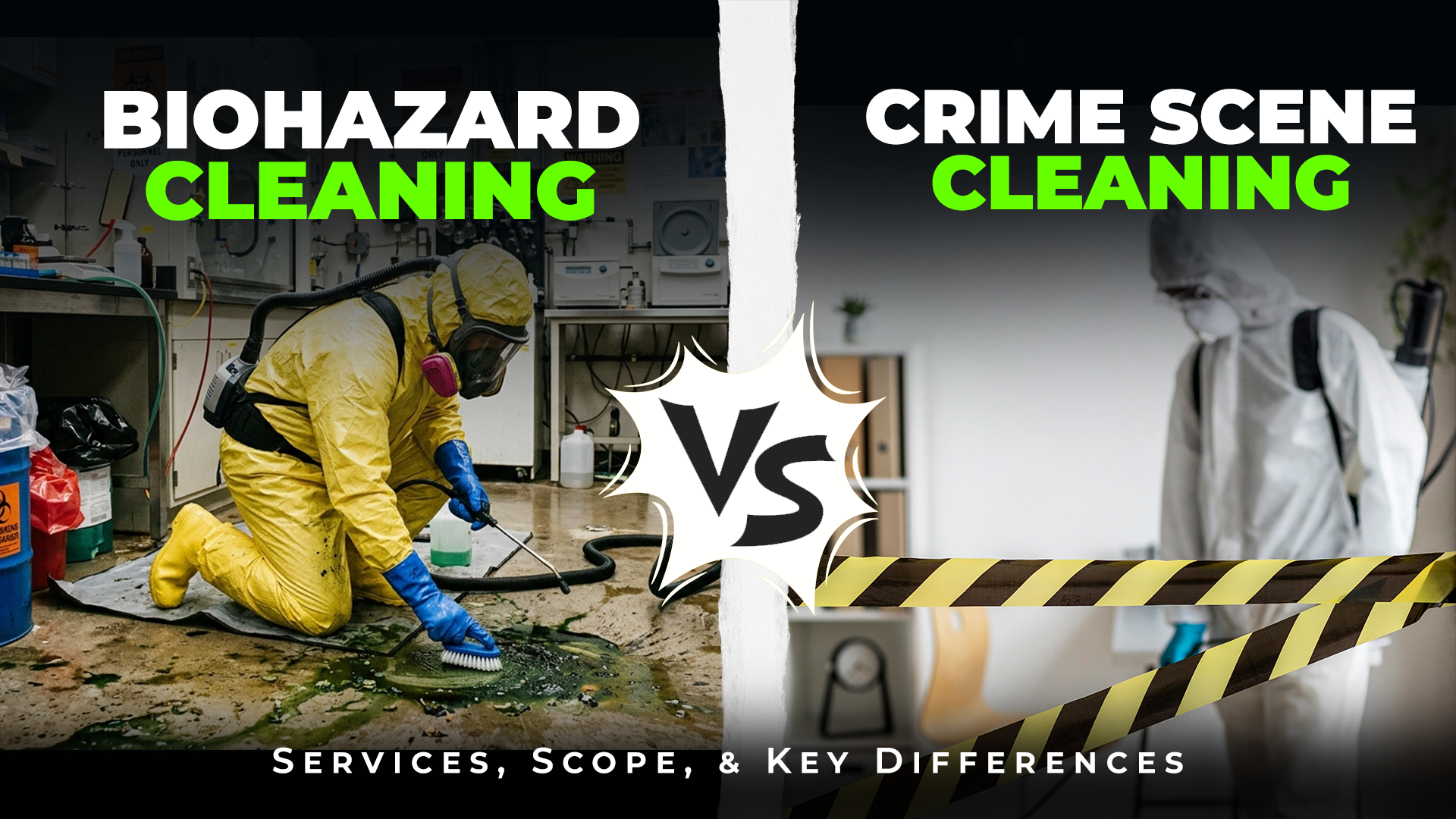
Biohazard cleaning and crime scene cleaning are closely related services, but they are not exactly the same. Biohazard cleaning addresses environments contaminated by biological or other hazardous materials, while crime scene cleaning focuses on restoring areas affected by a crime, violence or traumatic incident after the relevant authorities have released the scene. Crime scene cleaning often falls within the broader field of biohazard remediation.
For Australian property owners, landlords, property managers, businesses and families, understanding the difference helps determine what type of professional cleaning is required, what hazards need to be addressed and when specialist assistance is necessary. Both services can involve exposure to bloodborne pathogens, contaminated materials, hazardous waste and other risks that ordinary cleaning methods are not designed to manage.
What Is Biohazard Cleaning?
Biohazard cleaning is the specialised removal, cleaning and decontamination of areas affected by biological or other hazardous materials that may pose a risk to human health. Depending on the incident, these materials can include blood, bodily fluids, biological waste, contaminated sharps and other potentially infectious substances.
The appropriate response depends on the material involved, the potential exposure routes and the conditions at the site.
What Does Biohazard Cleaning Include?

The scope of a professional biohazard cleaning service depends on the type and extent of contamination. Typical tasks may include:
- Site assessment: Identifying contaminated areas, affected materials and potential exposure risks.
- Hazardous material removal: Safely removing blood, bodily fluids, contaminated items and other identified hazards.
- Cleaning and decontamination: Treating affected surfaces using suitable cleaning agents and disinfection procedures.
- Odour management: Addressing persistent odours associated with biological contamination or decomposition.
- Waste handling: Segregating, containing and arranging appropriate disposal of contaminated materials.
- Final assessment: Checking the treated area and identifying whether further cleaning, testing or restoration is required.
These tasks are not identical for every job. A small, accessible contamination may require a different approach from a property affected by an unattended death, extensive biological contamination or hazardous chemical residues.
When Do You Need Biohazard Cleaning?
Professional biohazard cleaning may be appropriate after:
- An unattended death involving decomposition or biological contamination.
- A blood or bodily fluid spill that exceeds the safe capacity of routine cleaning.
- An incident involving contaminated needles or sharps.
- A property affected by sewage or other potentially contaminated waste.
- A traumatic incident that leaves biological material on floors, furnishings or other surfaces.
- Certain drug-related incidents involving hazardous residues that require specialist assessment.
Not every biological spill requires a specialist contractor. Small spills in controlled environments may be manageable under established workplace procedures. However, extensive contamination, uncertain hazards, inaccessible materials or situations involving significant exposure risks warrant professional assessment.
What Is Crime Scene Cleaning?

Crime scene cleaning is a specialised service that removes contamination and addresses environmental hazards left behind after a criminal incident, once the relevant authorities have released the affected area for cleaning.
The work may involve blood, bodily fluids, contaminated materials and residues associated with an incident or the investigation. The objective is to address the contamination safely and prepare the affected area for its intended use, subject to any additional restoration or testing requirements.
Unlike general cleaning, crime scene cleanup requires an understanding of biological contamination, safe waste handling, appropriate protective equipment and the emotional sensitivity surrounding the incident.
What Does Crime Scene Cleaning Include?
Depending on the scene, professional crime scene cleaning services may involve:
- Initial site assessment: Establishing the affected areas, identifying visible contamination and determining the required scope of work.
- Removal of contaminated materials: Collecting and containing biological waste and affected items that cannot be safely restored.
- Cleaning and disinfection: Treating contaminated surfaces using methods and products suitable for the hazards and materials involved.
- Odour treatment: Addressing odours associated with blood, bodily fluids or decomposition where necessary.
- Waste disposal: Arranging appropriate handling and disposal of removed contaminated materials.
- Property restoration coordination: Identifying damage that may require repairs, replacement of materials or additional specialist treatment.
For example, blood may penetrate carpet backing, underlay, timber joints or other porous materials. Cleaning only the visible surface may leave contamination behind. The appropriate treatment depends on how far the material has penetrated and whether the affected components can be safely cleaned or need removal.
Crime scene cleaning may also involve coordination with property owners, landlords, insurers or restoration contractors. The cleaning provider should clarify what its service covers and whether structural repairs, replacement materials or independent testing fall outside the agreed scope.
When Do You Need Crime Scene Cleaning?
Crime scene cleaning may be required after:
- An assault or other violent criminal incident involving blood or bodily fluids.
- A homicide investigation, after police release the scene.
- A traumatic incident involving biological contamination.
- A crime involving contaminated furnishings, flooring or other property.
- An incident where investigative activities have left residues requiring specialist cleaning.
The crime itself does not automatically determine the cleaning method. The actual hazards, affected materials and extent of contamination determine the work required.
Biohazard Cleaning vs Crime Scene Cleaning: Key Differences

The main difference is the reason the service is required and the context in which the contamination occurred. Biohazard cleaning is the broader category, while crime scene cleaning is a specialised application commonly involving biological hazards at locations affected by criminal or traumatic incidents.
Comparison | Biohazard cleaning | Crime scene cleaning |
Primary purpose | Manage biological or other hazardous contamination | Clean and decontaminate a location affected by a crime or traumatic incident |
Typical situations | Unattended deaths, biological spills, contaminated sharps and certain hazardous waste incidents | Assaults, homicides and other incidents involving contamination at a crime scene |
Main hazards | Blood, bodily fluids, infectious materials and other identified hazards | Blood, bodily fluids and incident-related contamination or residues |
Work scope | Determined by the specific hazard and extent of contamination | Determined by the incident, contamination and any investigation-related requirements |
Authority clearance | Depends on the circumstances and whether another authority controls access | Police or other relevant authority clearance is required before cleaning an active investigation scene |
Additional work | May include specialist remediation or waste removal | May include trauma-related decontamination, odour treatment and property restoration coordination |
Both services can involve similar equipment, protective measures, cleaning methods and waste-handling procedures. Neither service automatically guarantees that every affected building material can be restored or that structural repairs are included.
Is Crime Scene Cleaning the Same as Biohazard Cleaning?
No, although the services overlap significantly. Crime scene cleaning generally addresses contamination following a crime or traumatic event, whereas biohazard cleaning covers a broader range of situations involving hazardous biological materials.
Consider three examples:
Scenario 1: An unattended death. A person dies at home and is not discovered for several days. Decomposition may affect the flooring, furnishings and surrounding areas. This is a biohazard cleaning requirement and may also be described as after-death or trauma cleaning. If the death involves a crime, crime scene cleaning may be appropriate after the scene is released.
Scenario 2: A blood spill at a workplace. An employee sustains an injury, leaving blood on a floor. The employer follows the relevant workplace procedures or engages a specialist if the contamination requires it. This is generally a biohazard cleanup, not crime scene cleaning.
Scenario 3: A violent incident at a rental property. An assault leaves blood on a carpet and nearby furnishings. Once the relevant authorities release the scene, a crime scene cleaning provider can assess the contamination, remove affected materials where necessary and decontaminate the area.
These examples show why the terms should not be treated as interchangeable in every situation. The correct service depends on the incident and the hazards present.
How Does Professional Biohazard and Crime Scene Cleanup Work?
Although every site requires an individual assessment, a professional cleanup typically follows a structured process.
1. Assessment and planning
The cleaning team assesses the location, identifies affected surfaces and materials, considers exposure risks and determines the work required. The plan should account for access restrictions, waste handling and any need for additional remediation.
2. Containment and personal protection
The team establishes appropriate controls to limit exposure and prevent contamination from spreading. Depending on the risk assessment, this may involve restricting access, using suitable personal protective equipment (PPE) and applying other control measures.
3. Removal of contaminated materials
Contaminated waste and items that cannot be safely restored are removed using appropriate procedures. Materials are handled, contained and segregated according to their hazards and applicable waste requirements.
4. Cleaning and decontamination
Affected areas are cleaned to remove contamination before suitable disinfection or other treatments are applied. The products and procedures must be appropriate for the hazard and compatible with the surfaces being treated.
5. Final checks and restoration
The provider reviews the completed work and identifies any outstanding issues. Depending on the incident, further assessment, odour treatment, material replacement or specialist restoration may be needed before the property is suitable for reoccupation.
The exact process can vary considerably. A reliable contractor should explain what has been completed, what remains unresolved and whether any further testing or remediation is recommended.
Who Should You Hire for Biohazard or Crime Scene Cleaning in Australia?
Choose a specialist based on the actual contamination, not simply the name of the service.
Before engaging a contractor, ask whether they:
- Have relevant experience with the specific type and extent of contamination.
- Can explain their risk assessment, PPE and decontamination procedures.
- Follow appropriate procedures for containing, transporting and disposing of contaminated waste.
- Carry suitable insurance and can explain their qualifications or training.
- Provide a clear written scope covering removal, cleaning, disinfection, odour treatment and any exclusions.
- Can explain how completion will be assessed and whether additional testing or restoration is required.
- Handle sensitive situations discreetly and communicate respectfully with affected families, property owners or businesses.
Australian requirements can vary by state or territory and by the type of waste involved. Do not assume that a contractor’s general cleaning credentials alone establish competence for every hazardous situation.
Professional Biohazard and Crime Scene Cleaning Services from Trusted Bio Clean
Trusted Bio Clean provides specialist biohazard cleaning services and crime scene cleaning, including the removal of contaminated materials, decontamination of affected areas and appropriate handling of hazardous waste.
The company also lists trauma cleaning, after-death cleanup and forensic cleaning among its services. Its website describes a process involving site assessment, a tailored quote, cleaning and documentation following completion. Service scope should be confirmed for the particular property and incident.
For properties affected by severe weather, explore this guide to flood cleanup after storm damage in Sydney to understand the key considerations for addressing storm-related property damage.
If a property has been affected by a traumatic event or hazardous contamination, contact Trusted Bio Clean to discuss the situation and request a quote. Provide a brief description of the incident, the type of property and any known contamination so the team can determine the appropriate next step.
Frequently Asked Questions
Ans:- Biohazard cleaning addresses biological or other hazardous contamination across a range of settings. Crime scene cleaning focuses on decontaminating locations affected by criminal incidents or related trauma. Crime scene cleaning frequently includes biohazard remediation.
Ans:- Not necessarily. Both may have overlapping skills and equipment, but the experience required depends on the job. A contractor should be able to demonstrate competence in the specific hazards, cleaning procedures and waste-handling requirements involved.
Ans:- Routine cleaning services may not have the training, protective equipment or procedures needed for extensive biological contamination. Where blood, bodily fluids or other hazardous materials are present, a specialist assessment is advisable. Active crime scenes must not be disturbed before the relevant authorities release them.
Ans:- Waste must be assessed, contained, handled and disposed of according to its classification and the applicable state or territory requirements. Some clinical or biological waste requires specialised handling and disposal arrangements. The appropriate method depends on the material and its associated risks.
Ans:- The cost depends on factors such as the affected area, severity of contamination, materials involved, labour, equipment, waste disposal and any additional restoration work. A site assessment and clearly defined scope are the best starting points for obtaining an accurate quote.