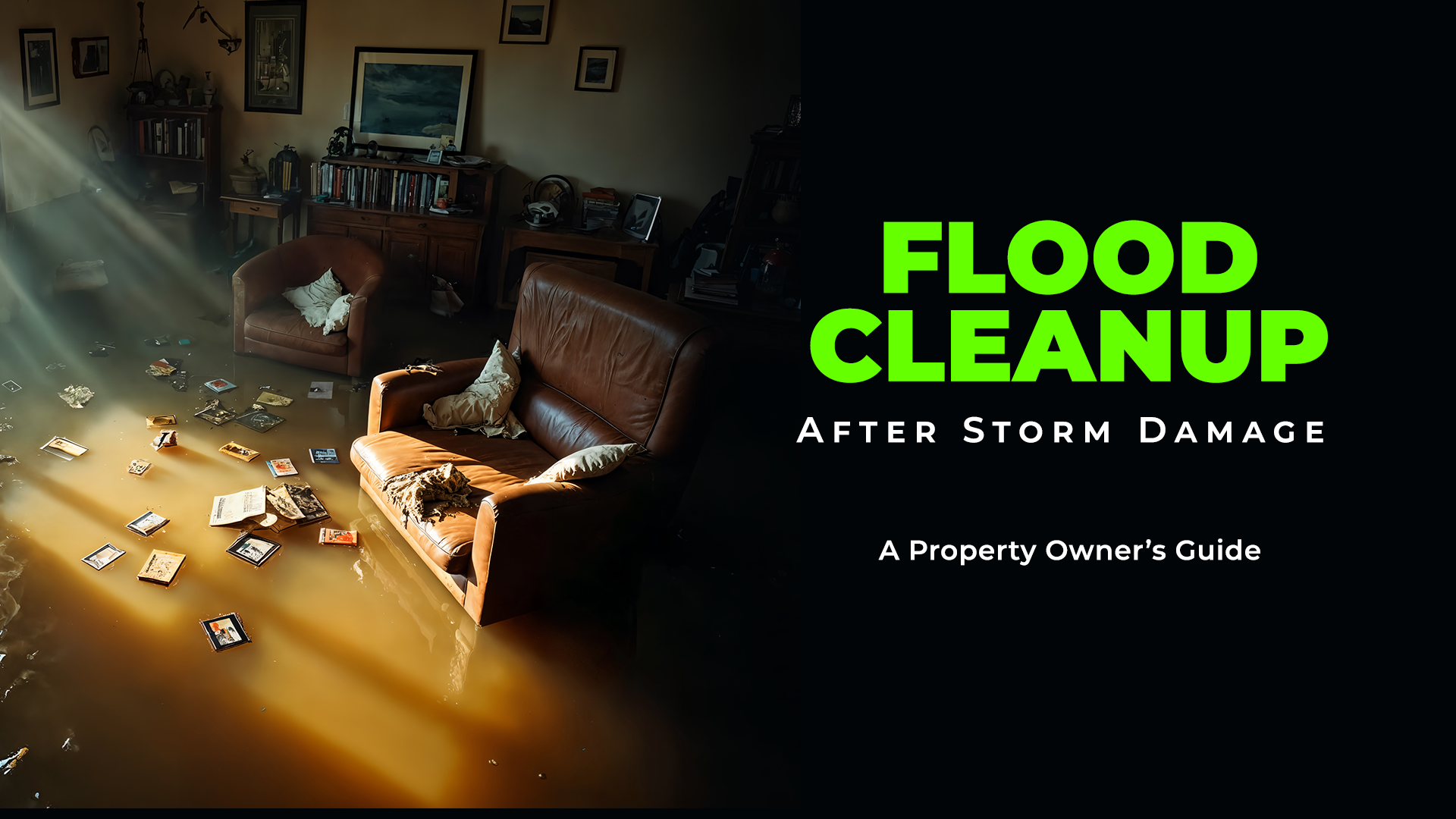
Storms can leave behind far more than standing water. Floodwater may carry mud, sewage, chemicals, debris and microorganisms, while moisture trapped inside floors, walls and other materials can create further problems if the property is not dried and cleaned properly. In Sydney, flood cleanup should therefore begin with safety, assessment and controlled water removal rather than simply mopping visible surfaces.
This guide explains what property owners should do after storm-related flooding, when professional help is appropriate, and how careful drying and cleaning can reduce ongoing flood damage and mould risks.
What should you do immediately after storm flooding?

The first priority is safety, not cleaning. Do not enter a damaged property until NSW authorities advise that it is safe, and never touch electrical equipment while standing in water or with wet hands.
Once it is safe to return:
- Document the damage. Photograph and record affected rooms, flooring, furniture, walls and belongings before extensive cleaning begins. This can help with insurance documentation.
- Check structural safety. Look for damage to walls, ceilings, windows and roofs. Do not enter areas that appear structurally unstable.
- Keep away from contaminated water. Floodwater can contain sewage, chemicals, bacteria, fungi and other contaminants.
- Arrange electrical inspections. Electrical equipment, power points and appliances affected by floodwater should be inspected by a qualified electrician before use.
- Start drying once the property is safe. NSW Health recommends beginning the drying process as soon as floodwaters recede and conditions allow.
Why is prompt flood damage cleanup important?
Flood cleanup is not simply about making a property look clean. Water can remain hidden behind walls, beneath flooring, inside cupboards, and within other building cavities. NSW Health specifically recommends checking for trapped water and mud in wall and floor cavities because incomplete drying can contribute to mould and mildew growth.
Prompt flood damage restoration can also help identify materials that need specialist attention rather than allowing damaged areas to remain wet.
A proper flood cleaning process may involve:
- Removing standing water and wet debris.
- Cleaning mud and contamination from affected surfaces.
- Drying accessible areas and materials.
- Cleaning and disinfecting suitable hard surfaces.
- Identifying materials that may require removal or specialist treatment.
- Checking concealed areas where moisture may remain.
- Addressing odours and visible contamination.
- Recording the work completed for property and insurance records.
The correct approach depends on the source and extent of the water, the materials affected and whether contaminants are present.
When should you use professional emergency flood cleanup services?

Professional assistance becomes particularly relevant when flooding has affected a large area, involved contaminated water, penetrated building materials or created conditions that are unsafe to clean without specialist equipment.
Professional flood cleanup services can be useful when:
- Water remains inside the property.
- Carpets, furniture, flooring or other porous materials are heavily saturated.
- Floodwater may have contained sewage or other contaminants.
- Moisture has entered walls, floors or enclosed cavities.
- Mould or persistent odours have developed.
- The property is a workplace or commercial premises that requires systematic cleaning.
- The extent of damage is difficult to assess safely.
The key distinction is that professional flood water removal and cleanup should address both visible water and the conditions that allow contamination, odours or mould to persist.
What does professional flood cleanup involve?
A professional flood damage restoration company will generally begin by assessing the property and determining what has been affected. The precise process should be tailored to the site rather than following a one-size-fits-all checklist.
For example, flood cleanup and water extraction may be required where standing water remains. Cleaning and disinfection may then be appropriate for suitable surfaces, while damaged porous materials may require separate assessment.
Trusted Bio Clean lists flood cleanup among its services and describes a process based on site assessment, a tailored quote, cleaning using enzyme cleaners and disinfectants, followed by photographs and documentation after completion. Its website also identifies Sydney among its service locations.
This makes professional flood cleanup services particularly relevant when the property requires more than basic household cleaning.
What about flood cleanup and mould prevention?
Drying is one of the most important parts of post-flood recovery because residual moisture can support mould and mildew growth. NSW Health advises property owners to open doors and windows on suitable dry days, use fans where appropriate and check concealed areas for trapped moisture.
However, drying equipment should be used safely. Petrol or diesel-powered equipment such as generators and pumps must never be operated in enclosed spaces because of dangerous exhaust gases.
For significant flooding, simply drying the visible floor may not be enough. Moisture can remain beneath flooring, behind walls or inside cupboards. These concealed areas should be assessed rather than assumed to be dry.
How is a basement cleaned after flooding?

Flooded basement cleanup can be more complicated because water may collect below ground level and remain against structural surfaces. A basement cleanup after flood should begin only after the property has been declared safe to enter.
For basement flood cleanup services, consider:
- Identifying and removing standing water safely.
- Checking electrical systems before operation.
- Removing contaminated debris.
- Cleaning affected hard surfaces.
- Checking walls, flooring and enclosed spaces for retained moisture.
- Drying the area thoroughly.
- Assessing materials that cannot be adequately cleaned or dried.
Do not assume that a basement is safe simply because the water level has fallen. Electrical hazards, structural damage and contamination can remain after visible flooding has disappeared.
Residential and commercial flood cleanup
The principles of residential flood cleanup services and commercial flood cleanup services are similar, but the practical requirements can differ.
A home may require attention to carpets, furniture, kitchens, bedrooms and personal belongings. A commercial property may involve larger areas, office equipment, storage spaces, customer areas or business-critical contents.
In either situation, the objective is not simply to remove visible dirt. Effective water damage cleanup should address water removal, contamination, drying and the condition of affected materials while keeping safety requirements in view.
Common mistakes to avoid after flooding
Avoid these shortcuts during flood damage cleanup:
- Entering too early: Wait for official advice and assess structural and utility hazards.
- Using damaged electrical equipment: Flood-affected electrical equipment should be checked by a qualified electrician before use.
- Ignoring hidden moisture: Walls, floors and cupboards can retain water after surfaces appear dry.
- Handling contaminated materials without protection: NSW SES recommends suitable protective clothing, including boots and gloves, during flood cleanup.
- Keeping contaminated food: Food that has contacted floodwater should not be consumed.
- Treating mould as the only problem: Mould can be a consequence of retained moisture, so the underlying moisture source needs to be addressed.
When should you call a flood cleanup company?
A flood cleanup company is worth considering when the property has substantial water intrusion, contamination, extensive wet materials, concealed moisture or conditions that make DIY cleaning unsafe.
The right professional flood cleanup services should begin with an assessment rather than an automatic promise of restoration. Ask what areas will be inspected, how water and contaminated materials will be handled, how drying will be approached and what documentation will be provided.
For Sydney property owners, NSW Government and NSW SES guidance should remain the starting point for safety decisions after storm or flood damage. Professional cleaners can then assist with the practical cleaning and remediation work once the site is safe to access.
Final thoughts
Effective flood cleanup is a process of making the property safe, removing water and contamination, drying affected areas and identifying materials that need further treatment or repair. Acting promptly matters, but rushing into an unsafe property can create additional risks.
For property owners who need professional assistance, Trusted Bio Clean provides flood cleanup as part of its property cleaning and remediation services and serves Sydney. Its published process includes site assessment, a tailored plan, cleaning and documentation. For more insight into the equipment used during specialist cleaning, explore the equipment used by biohazard cleaning experts at Trusted Bio Clean.
Frequently Asked Questions
Begin drying and cleaning as soon as the property is confirmed safe to enter and floodwaters have receded. NSW Health recommends starting the drying process promptly and checking concealed areas for trapped water.
Minor, non-contaminated flooding may sometimes be handled by property owners using appropriate protective equipment and safe cleaning methods. Floodwater can contain sewage, chemicals and microorganisms, however, so professional assistance may be appropriate when contamination, extensive damage or unsafe conditions are involved.
The scope depends on the property. It can include water removal, cleaning, disinfection, drying, assessment of affected materials and documentation. Restoration or building repairs may require separate qualified trades.
Remove standing water, dry affected areas promptly and check concealed spaces where moisture can remain. NSW Health recommends ventilation during suitable dry conditions and checking wall and floor cavities for trapped water and mud.
There is no reliable single price because the cost depends on factors such as the affected area, type of cleaning required and complexity of the situation. Trusted Bio Clean states that its pricing considers the type of cleaning, affected area size and complexity, with quotes tailored to the site.