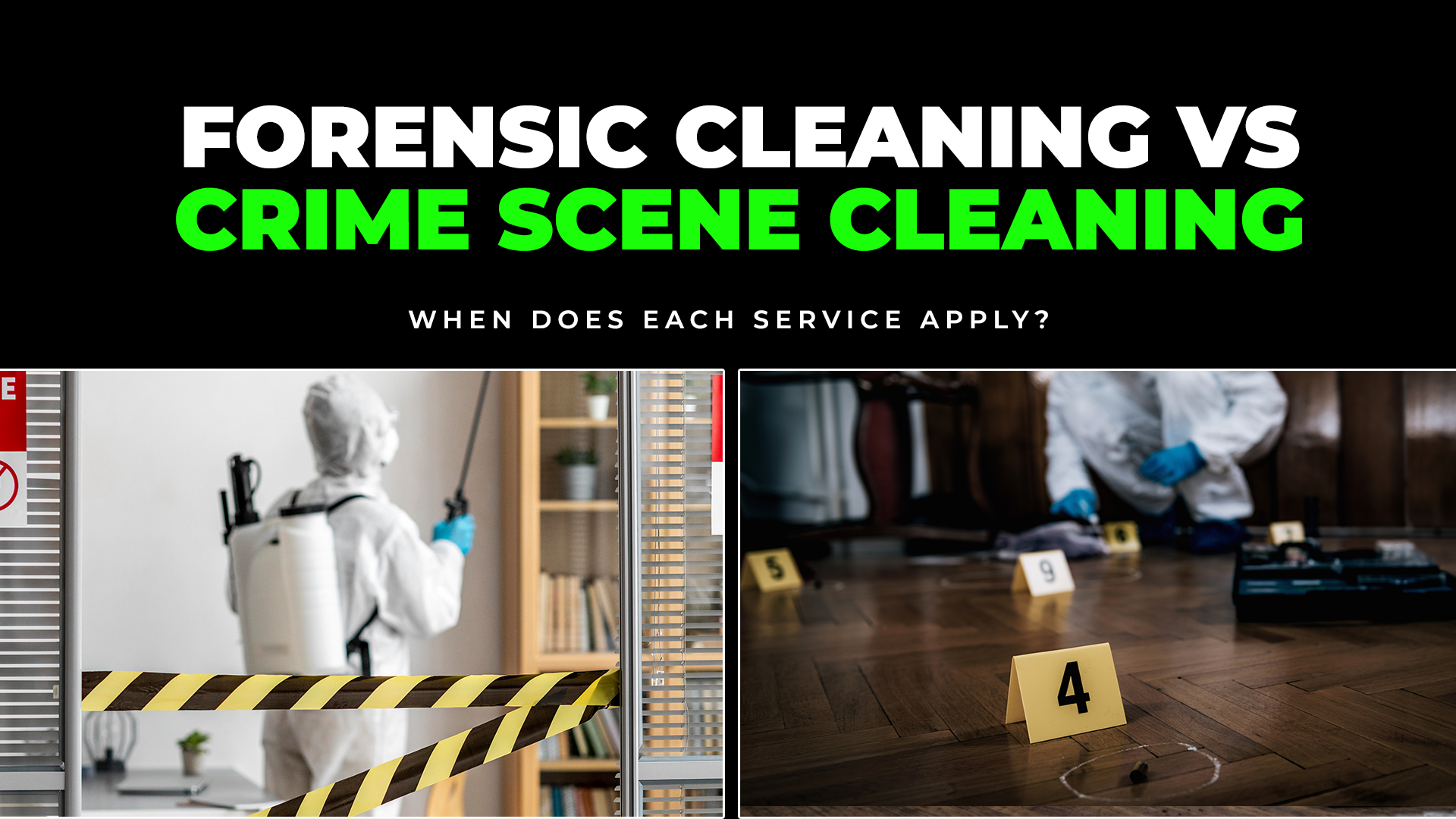
Forensic cleaning and crime scene cleaning both involve the safe removal of hazardous biological materials, but they are not always used to describe the same scope of work. Crime scene cleaning focuses on decontaminating areas affected by criminal incidents, while forensic cleaning is a broader term that can include crime scenes, traumatic deaths, unattended deaths and other biohazard contamination.
For Australian property owners, landlords, real estate agents, businesses and families, understanding the difference between forensic cleaning vs crime scene cleaning helps determine which specialist service is appropriate. The right choice depends on what happened, the type and extent of contamination, whether police have released the scene, and what is required to make the affected property safe for its intended use.
What Is Forensic Cleaning?

Forensic cleaning is the specialist cleaning and decontamination of environments affected by biological or other hazardous substances. It may be required after a death, traumatic incident, serious accident, or other event that leaves a property contaminated.
Unlike routine domestic or commercial cleaning, forensic cleaning services address contamination risks that ordinary cleaning methods may not adequately manage. Blood, bodily fluids, contaminated belongings and affected building materials can require specialised handling, cleaning, disinfection and waste disposal.
Depending on the incident, forensic cleaning may involve:
- Removing visible blood, bodily fluids and other contaminated material.
- Cleaning and disinfecting affected surfaces using methods appropriate to the contamination and materials involved.
- Assessing porous materials, furniture, flooring and other items that may need specialist treatment or removal.
- Managing contaminated waste and potentially hazardous objects.
- Addressing persistent odours where they are associated with biological contamination.
- Assessing whether further remediation or restoration work is needed.
The precise work depends on the site assessment. Not every incident requires structural removal, and not every surface can be made suitable for reuse through cleaning alone.
Forensic cleaning is therefore not simply a more intensive version of ordinary cleaning. It requires a risk-based approach to identifying contamination, preventing cross-contamination and selecting appropriate control measures.
What Is Crime Scene Cleaning?

Crime scene cleaning is a specialist service that removes contamination left behind by a criminal incident once the relevant authorities have authorised access to the affected area.
A crime scene may contain blood, bodily fluids, contaminated personal belongings, broken materials or other hazards. Professional crime scene cleaning services focus on removing these hazards, decontaminating affected areas and assessing what needs to be cleaned, treated or removed.
Common situations requiring crime scene cleanup include:
- Assaults and violent incidents: Blood or other biological material may contaminate floors, walls, furniture and nearby objects.
- Homicides: The affected property may require extensive decontamination, including assessment of porous materials and concealed contamination.
- Stabbings or other serious injuries: Blood contamination may extend beyond the immediately visible area.
- Criminal incidents involving contaminated materials: Certain scenes may contain additional hazards that require specialist assessment before cleaning can begin.
The service may also involve deodorisation, safe waste handling and coordination with property owners, insurers or other relevant parties.
One distinction matters: crime scene cleaners do not investigate crimes or replace police forensic officers. Their role is to clean and remediate the affected environment after the scene has been released for that purpose.
Forensic Cleaning vs Crime Scene Cleaning: Key Differences

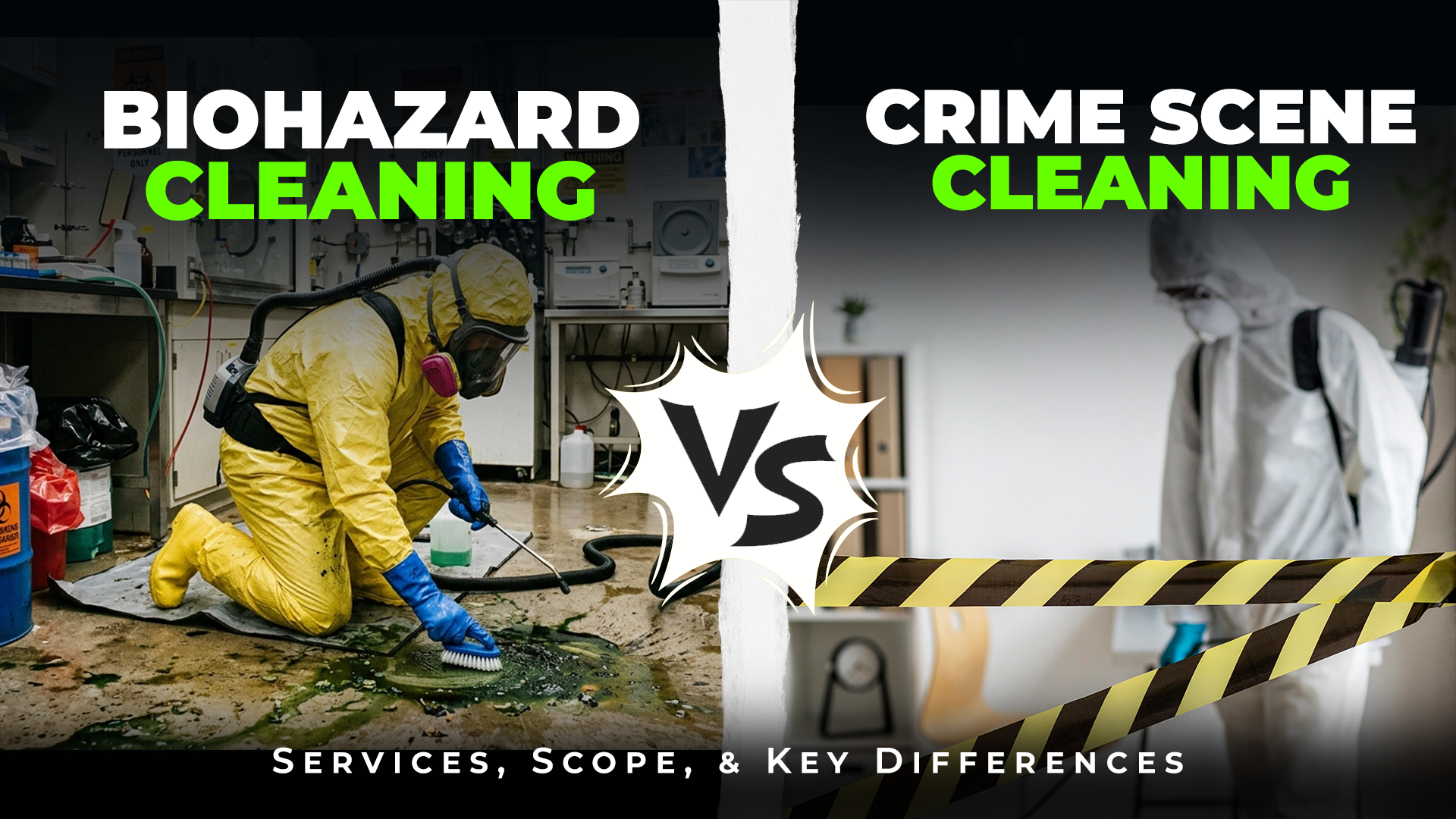
The main difference between forensic cleaning and crime scene cleaning is the scope of the service, rather than a universally separate cleaning method. The terms overlap, and providers may use them differently when describing their services.
|
Comparison |
Forensic cleaning |
Crime scene cleaning |
|
Primary purpose |
Remediate environments affected by biological or other hazardous contamination |
Clean and decontaminate areas affected by criminal incidents |
|
Typical situations |
Unattended deaths, traumatic deaths, suicides, biohazard incidents and crime scenes |
Assaults, homicides, stabbings and other criminal incidents |
|
Contamination |
Depends on the incident and may include biological materials or other hazardous residues |
Often includes blood, bodily fluids and contaminated materials associated with the incident |
|
Scope |
Can cover several types of biohazard remediation |
Usually centred on the aftermath of a criminal event |
|
Specialist requirements |
Risk assessment, appropriate protective equipment, decontamination and waste management |
The same core controls, plus confirmation that the scene has been released by the relevant authorities |
|
Relationship between services |
May include crime scene cleaning |
Often forms part of a broader forensic cleaning service |
These distinctions are practical rather than absolute. A serious assault in a home could require both forensic cleaning and crime scene cleaning, depending on how the provider defines the work.
When comparing forensic cleaning services, focus on the contamination present, the work required and the provider’s ability to manage the specific hazards. The service label alone does not establish whether a contractor is suitably qualified for the job.
When Does Each Service Apply?
Choosing between forensic cleaning and crime scene cleaning becomes easier when you consider the circumstances that created the contamination.
When forensic cleaning is required
Forensic cleaning may be appropriate when a property needs specialist decontamination after an incident that leaves hazardous biological material behind, whether or not a crime occurred.
Typical examples include:
- Unattended deaths: Bodily fluids, decomposition-related contamination and persistent odours may affect a room or adjoining areas.
- Suicides and traumatic deaths: Contamination may require specialist removal and treatment of affected surfaces or materials.
- Blood or bodily fluid contamination: A significant spill or contamination affecting porous materials may exceed the capabilities of routine cleaning.
- Other biohazard incidents: Specialist remediation may be needed where the nature, extent or source of contamination creates risks that ordinary cleaning cannot adequately address.
For example, if a person dies at home and the death is not associated with a suspected crime, a specialist forensic or after-death cleaning service may still be appropriate. The need for professional cleaning is determined by the contamination and the risks involved, not simply by whether police classify the incident as a crime.
When crime scene cleaning is required
Crime scene cleaning is generally appropriate when a criminal incident has left an area contaminated, and the authorities have authorised access for remediation.
Examples include a home affected by an assault, a business premises where a violent incident occurred, or a vehicle contaminated during a criminal event.
The work may extend beyond visible stains. Depending on the incident, the cleaner may need to assess adjoining surfaces, furniture, flooring and materials that could have been contaminated.
For instance, a blood spill on a hard, non-porous floor may require a different treatment approach from contamination that has penetrated carpet underlay or timber flooring. The correct scope depends on the material, the extent of contamination and whether the affected components can be safely decontaminated.
In either case, cleaning should not begin until any necessary police or other authority restrictions have been lifted.
What Does Professional Forensic Crime Scene Cleaning Involve?
Professional forensic cleaning services generally follow a structured process designed to control exposure risks, prevent cross-contamination and determine whether affected areas can be safely reused.
Although procedures vary by incident, the main stages typically include the following.
1. Site assessment and risk identification
The cleaning team assesses the affected area, the materials involved and the potential hazards. The assessment helps determine the equipment, protective measures, cleaning methods and waste-handling arrangements required.
2. Containment and personal protection
Appropriate barriers, access restrictions and personal protective equipment (PPE) help minimise exposure and prevent contamination from spreading. The level of protection depends on the hazards identified.
3. Removal of contaminated materials
Visible biological material and other contaminated items are removed using suitable procedures. Some materials may be salvageable, while others may require removal if safe decontamination is not feasible.
4. Cleaning and disinfection
Affected surfaces are cleaned before appropriate disinfection is undertaken. The choice of product and method depends on the contaminant, the surface and the manufacturer’s instructions, including the required contact time.
5. Waste management and final assessment
Contaminated waste is handled and disposed of through appropriate channels. The team then assesses the completed work and identifies any outstanding remediation or restoration requirements.
A professional cleaning service should also explain what its scope covers and whether any further specialist assessment is necessary. Cleaning completion should not be confused with a guarantee that every building material is suitable for reuse.
For Australian property owners, landlords, real estate agents, businesses and families, understanding the difference between forensic cleaning vs crime scene cleaning helps determine which specialist service is appropriate. The right choice depends on what happened, the type and extent of contamination, whether police have released the scene, and what is required to make the affected property safe for its intended use.
How to Choose the Right Forensic Cleaning Service in Australia
When comparing professional crime scene cleaning services or forensic cleaners, assess their ability to handle the actual contamination rather than relying on the service name alone.
Before booking, ask the provider:
- What experience and training do your cleaners have? Ask about relevant biohazard cleaning training, incident-specific experience and applicable certifications.
- Are you appropriately insured? Confirm that the insurance covers the work being undertaken.
- How will you assess and control contamination risks? The provider should explain the proposed cleaning, disinfection, PPE and waste-management procedures.
- Will any materials need to be removed? Ask how the team determines whether affected carpets, furnishings or building materials can be safely treated.
- What documentation will I receive? Confirm whether the quote, work scope, completion photographs and other records are included.
- What areas do you service? Confirm availability for the property’s location, including if you require crime scene cleaning in Brisbane or another Australian city.
You should also clarify whether the quote includes disposal, deodorisation, material removal and any additional remediation. These items can affect the overall cost and scope of work.
Avoid attempting to clean substantial blood contamination or unknown hazardous residues yourself. Ordinary household cleaning products and equipment may be unsuitable, while incorrect handling can increase exposure and spread contamination.
For Australian property owners, landlords, real estate agents, businesses and families, understanding the difference between forensic cleaning vs crime scene cleaning helps determine which specialist service is appropriate. The right choice depends on what happened, the type and extent of contamination, whether police have released the scene, and what is required to make the affected property safe for its intended use.
Choosing the Right Service
The practical distinction between forensic cleaning vs crime scene cleaning comes down to the incident, the contamination and the work required to address it safely. Crime scene cleaning is generally associated with criminal incidents, while forensic cleaning covers a wider range of specialist decontamination situations.
Both require appropriate risk assessment, protective equipment, cleaning methods and waste management. Before arranging either service, confirm that the area has been released by the relevant authorities and that the provider has the appropriate training, insurance and procedures for the job. For other property damage situations, explore our guide to flood cleanup after storm damage in Sydney for practical information on managing storm-related damage.
If you need specialist help, contact Trusted Bio Clean to discuss the affected property and request a tailored quote.
Frequently Asked Questions
Ans:- No, although the terms overlap. Crime scene cleaning refers specifically to cleaning after criminal incidents, while forensic cleaning can cover a broader range of biohazard and traumatic-event situations, including deaths that do not involve a crime.
Ans:- Specialist biohazard cleaning professionals with appropriate training, equipment and risk-control procedures perform this work. Police forensic officers investigate scenes and collect evidence; they have a different role from cleaning contractors.
Ans:- Crime scene cleaning may be required when a criminal incident leaves blood, bodily fluids or other hazardous contamination behind. Cleaning should only proceed once the relevant authorities have released the area.
Ans:- Routine cleaners may not have the training, PPE, equipment or procedures needed to manage significant biological contamination safely. A specialist should assess incidents involving substantial blood spills, contaminated porous materials or other serious biohazards.
Ans:- Start by contacting a specialist provider, explaining the type of incident and confirming that the scene has been released for cleaning. Trusted Bio Clean offers crime scene cleaning in Brisbane, alongside broader forensic cleaning services. Request a site-specific quote so the required work can be assessed before cleaning begins.